September 1, 2026
Trials & Tribulations in Testing
It's harder than It sounds to test a product that only moves for half a second, once a day.
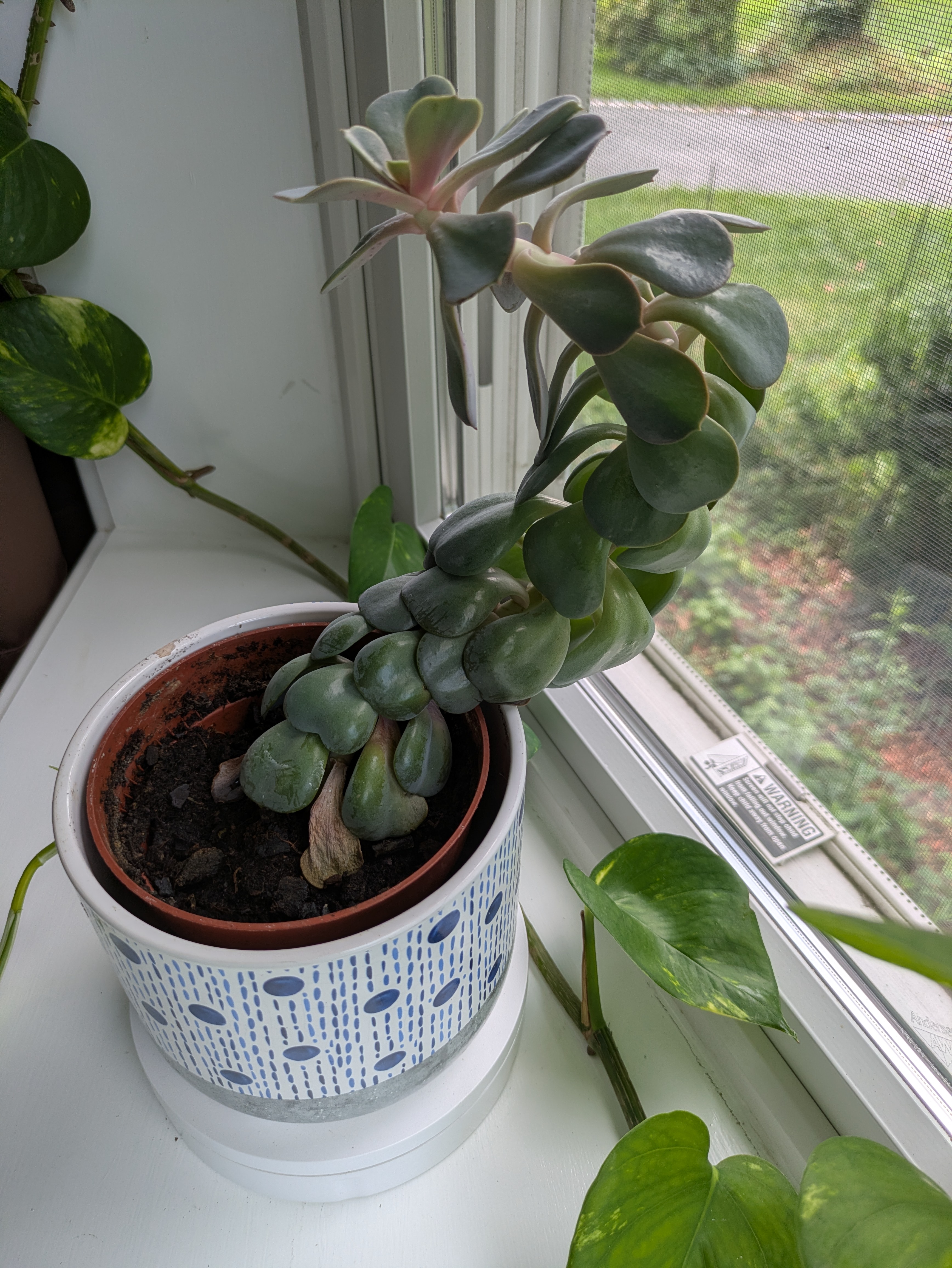
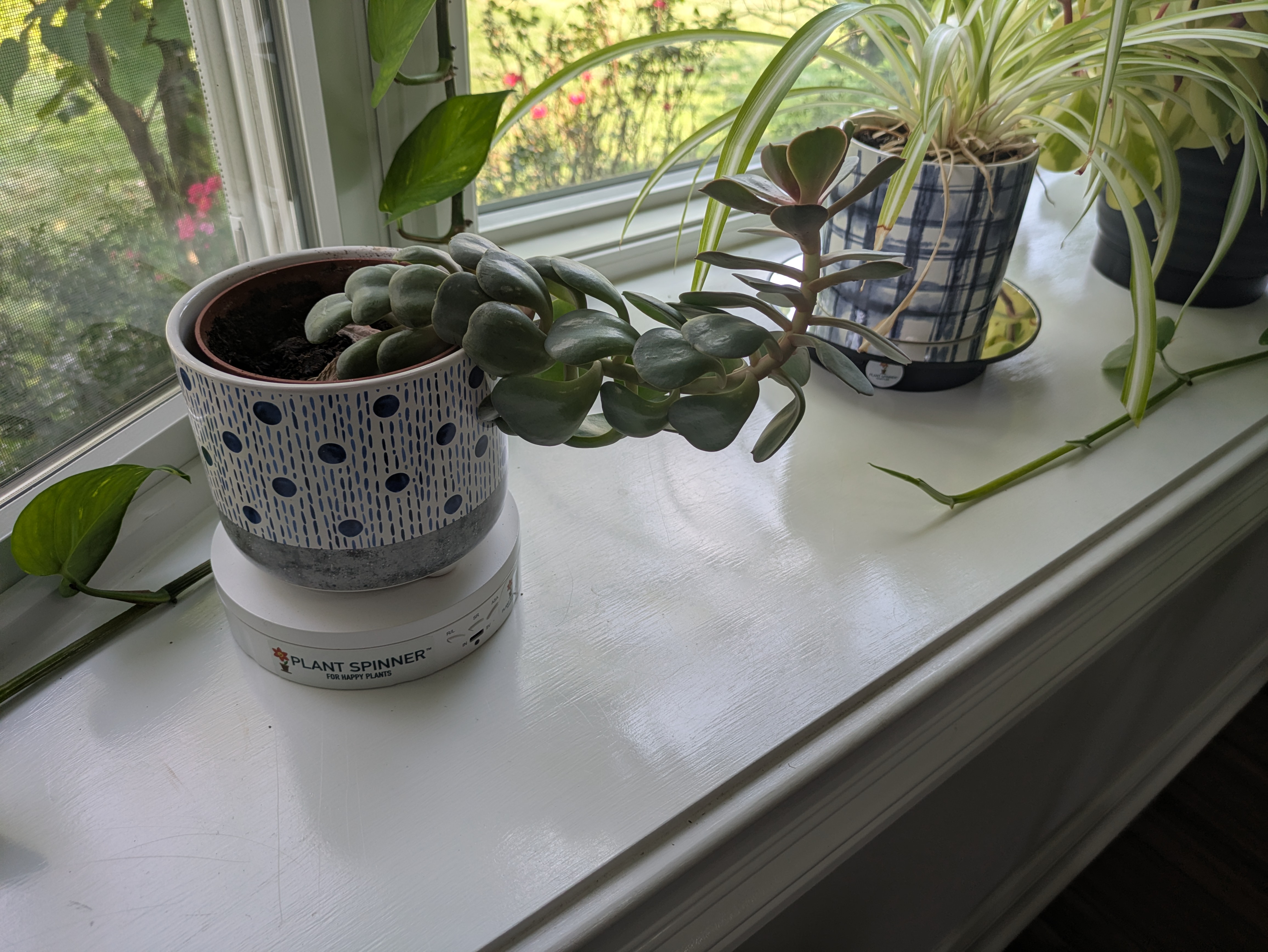
Here's something nobody tells you about building a product that works slowly, on purpose, for living things: it is incredibly annoying to prove. I've been testing Plant Spinner for about a year now, and you'd think after that long I'd have some slick before-and-after, a satisfying video, an obvious "look, it works" moment. Instead I have folders of very-slightly different photos, and a growing suspicion that plants are terrible at content creation.
The demo problem nobody warns you about
Plant Spinner does one thing: it rotates a plant a little bit each day, so the plant doesn't grow lopsided toward the light. That's it. That's the whole function. Which sounds simple until I try to show someone that it's happening. It only spins once a day. And even when I know roughly when that is, it still catches me off guard. I'll be standing right there, phone in hand, and it'll spin five seconds after I stop recording, or 5 minutes before I was even ready. I have missed more spins on camera than I've caught, that's for sure. So the obvious answer is: time-lapse. One photo a day, stitched together, boom, satisfying proof. Except, plants grow slowly. Like, dramatically, almost insultingly slowly when you're trying to make content. A time-lapse that actually shows meaningful growth needs weeks of daily photos, taken from the exact same angle, in the exact same light, without forgetting a single day. I am one guy running a company solo. I have forgotten days. Multiple days. In a row. The result is a lot of half-finished time-lapse sequences that prove I still have a lot of work to do.
The other thing I still don't know
Testing this year hasn't just been about video. There's real, unglamorous product data I'm still chasing down: The exact rotation on ASA (Automatic Spin Assist) mode. I know it's turning. I don't yet have the precise degree measurement dialed in. It's on the list, right below "figure out how to photograph a plant that refuses to grow on my schedule." Battery life. This one's genuinely tricky, not just an oversight. How long a charge lasts depends on the weight of the plant sitting on top of it. That weight is a moving target, literally, because the plant keeps growing. A tiny succulent draws almost nothing. A plant that's tripled in size a few months later is a different load entirely. So "how long does the battery last" doesn't have one answer, it has a curve, and I'm still mapping it.
But here's the thing I did find
A year of watching, not-quite-time-lapsing, and generally living with this product taught me something I didn't expect: it's not equally useful for every plant. Older, established plants? They lean a little, sure, but they're sturdy. They've got a root system and a shape that holds. Spinning is more of a nice-to-have, and better left to party mode when guests are over. Baby plants and new growth, though, that's where Plant Spinner actually earns its keep. Young plants are light, top-light in particular, growing fast, and extremely opinionated about which direction the sun is in. Left alone, they'll bend hard and fast toward the window in a way that shapes how they grow for the rest of their life. Catch that early with regular rotation, and you get a plant that grows up straight instead of one that's permanently curved from six weeks of leaning as a seedling. So the thing I set out to build, "stop my top-heavy plant from face-planting on the floor," turns out to maybe not be the main story. The main story might be: this is a tool for people growing new plants from cuttings, seedlings, and propagations, who want them to grow up straight instead of crooked. That's a narrower audience than "everyone with plants." It's also a much clearer one, and clear beats broad when you're trying to explain a product in a single sentence.
What's next
I'm going to keep chasing the hard numbers; real rotation degrees, a real battery curve instead of "it depends", because eventually I do need actual specs on the box, not just cool vibes. But I'm also going to start leaning into the baby-plant angle rather than fighting it. If you're propagating, growing seedlings, or nursing new cuttings and want them to grow up straight instead of into a question mark, that might be exactly who this is for. If you've got a baby plant that's already looking a little crooked, I'd genuinely love to hear about it, testing works a lot better with more plants than just mine.